
What is special about Mgahinga Gorilla National Park?
Tucked away in the far southwestern corner of Uganda, right at the meeting point of international borders with Rwanda and the Democratic Republic of the Congo, lies a sanctuary unlike any other in East Africa. Mgahinga Gorilla National Park is Uganda’s smallest national park, spanning just 33.7 square kilometers (13 square miles). Yet, despite its compact footprint, Mgahinga delivers an extraordinary density of ecological diversity, dramatic landscapes, and profound cultural heritage.
For travelers deciding where to experience the Albertine Rift montane forests, Mgahinga offers an exclusive, tranquil, and untamed alternative to larger, heavily visited destinations like Bwindi Impenetrable National Park. Below is an in-depth guide detailing exactly what makes Mgahinga Gorilla National Park so exceptionally special.
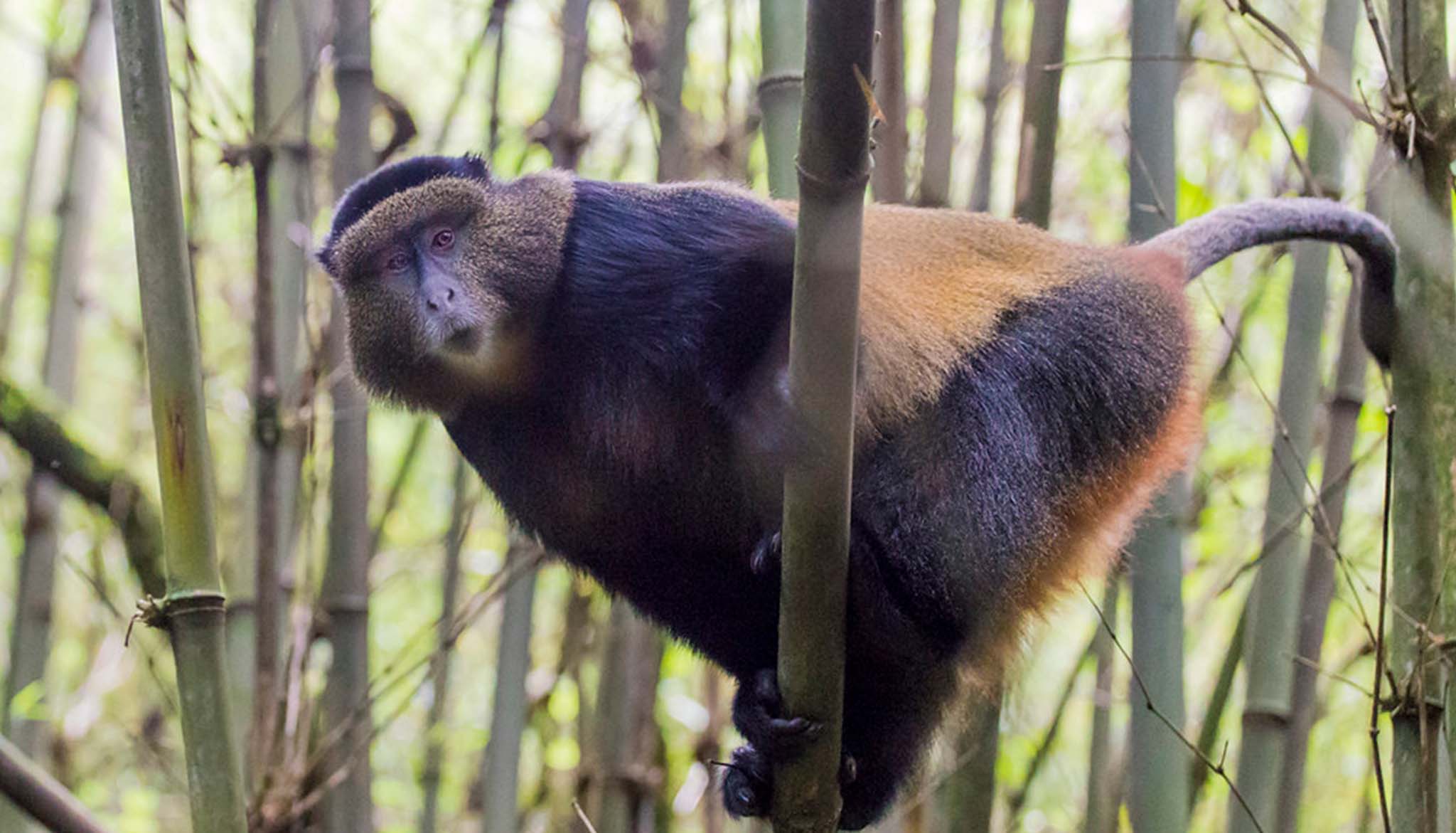
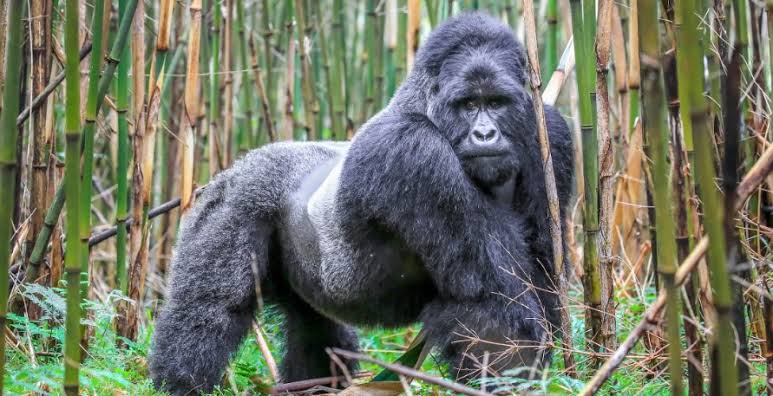
1. “Where Gold Meets Silver”: Gorillas and Golden Monkeys in One Place
The signature distinction of Mgahinga Gorilla National Park is famously encapsulated in its conservation slogan: “Where Gold Meets Silver.”
Mgahinga is the only national park in Uganda where endangered Mountain Gorillas (silverbacks) and rare Golden Monkeys share the same high-altitude bamboo habitat.
- The Nyakagezi Gorilla Family: Mgahinga is home to the habituated Nyakagezi family. In earlier years, this group was known for its transboundary roaming habits, occasionally crossing into Rwanda’s Volcanoes National Park or DRC’s Virunga National Park. However, for over a decade, the Nyakagezi family has permanently settled within Mgahinga’s Ugandan borders. Because the park tracks only one primary habituated group for tourism, gorilla trekking here is intimate, highly regulated, and uncrowded.
- Golden Monkey Tracking: Found exclusively in the Virunga Massif and Kahuzi-Biéga, the golden monkey is an endangered primate known for its vivid orange-gold coat, playful canopy antics, and curiosity. Tracking these energetic primates through the bamboo zones provides a stark, delightful contrast to the quiet majesty of gorilla habituation.
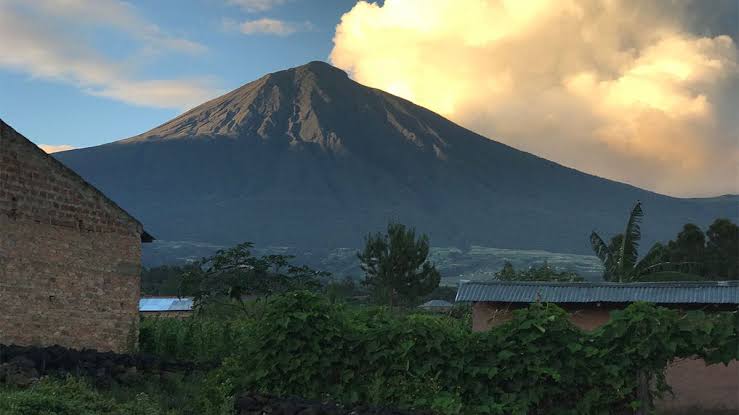
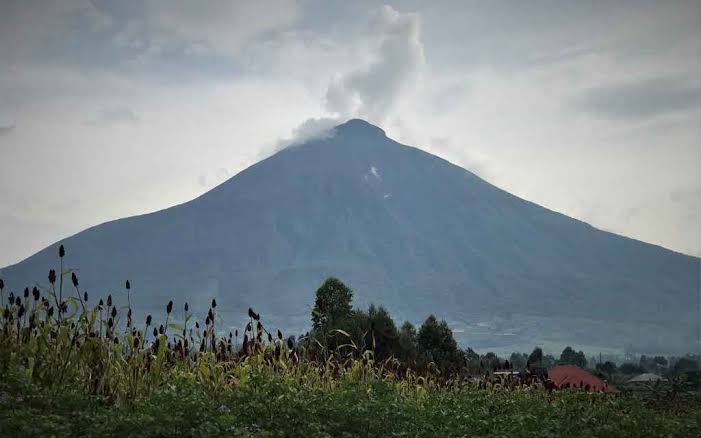
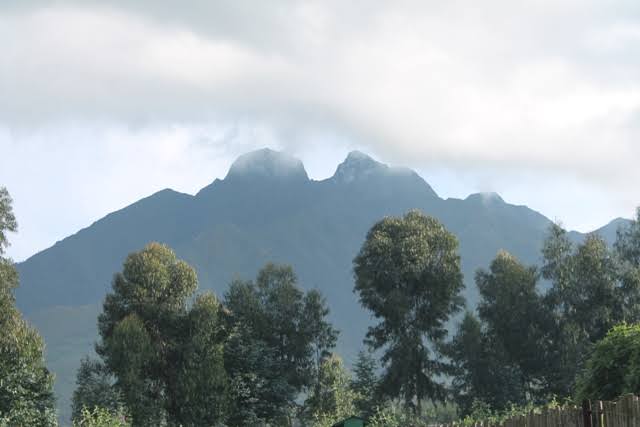
2. The Virunga Volcanoes: A Triad of Majestic Peaks
Mgahinga Gorilla National Park protects the Ugandan slopes of three dormant Virunga volcanoes. These majestic cones dominate the skyline and create a dramatic backdrop that set Mgahinga apart from any other park in the country.
Each volcano offers a distinct single-day summit hike departing directly from the Ntebeko Visitor Centre:
Mount Sabinyo (3,645m / 11,958ft)
Known locally as “Old Man’s Teeth” due to its jagged, weathered summit outline, Mount Sabinyo offers one of the most unique geographic experiences in Africa. The trail involves climbing hand-hewn wooden ladders across steep ridges to reach the peak. Upon reaching the summit, you stand simultaneously in three sovereign nations: Uganda, Rwanda, and the Democratic Republic of the Congo.
Mount Gahinga (3,474m / 11,397ft)
The park derives its name from Mount Gahinga, named after the local Kiga/Fumbira word for small piles of volcanic stones cleared from farmland. The hike takes travelers through lush bamboo forests before reaching a swamp-filled caldera at the summit surrounded by giant lobelias.
Mount Muhavura (4,127m / 13,540ft)
Meaning “The Guide” because its towering peak historically served as a navigational landmark across the region, Mount Muhavura is the steepest and most challenging climb in the park. Hikers who conquer the steep gradient are rewarded with panoramic views across the Albertine Rift and a pristine crater lake situated at the summit.
3. Compact Size and Exclusive, Uncrowded Wilderness
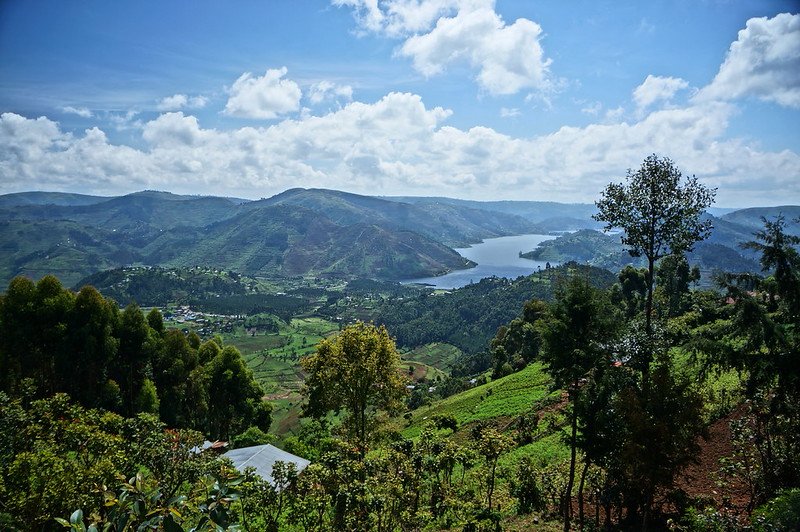
Covering just 33.7 square kilometers, Mgahinga proves that ecological significance is not measured by land area. While neighboring Bwindi Impenetrable Forest spans over 320 square kilometers across multiple sectors, Mgahinga’s compact footprint offers distinct travel advantages:
- Lower Tourist Density: With only one gorilla family open for tracking, visitor numbers are strictly capped each day. You will never encounter the convoy-style tourist traffic or crowded briefing areas common in larger parks.
- Ease of Navigation: All major trekking trails, volcano climbs, golden monkey walks, and cultural experiences originate from a single central hub: the Ntebeko Visitor Centre.
- High Sighting Success Rates: Because the search area for the Nyakagezi group is concentrated within the park’s defined valleys and bamboo zones, advanced UWA tracker teams locate the family quickly each morning, resulting in sighting success rates exceeding 98%.
4. The Batwa Cultural Trail: Living Forest Lore
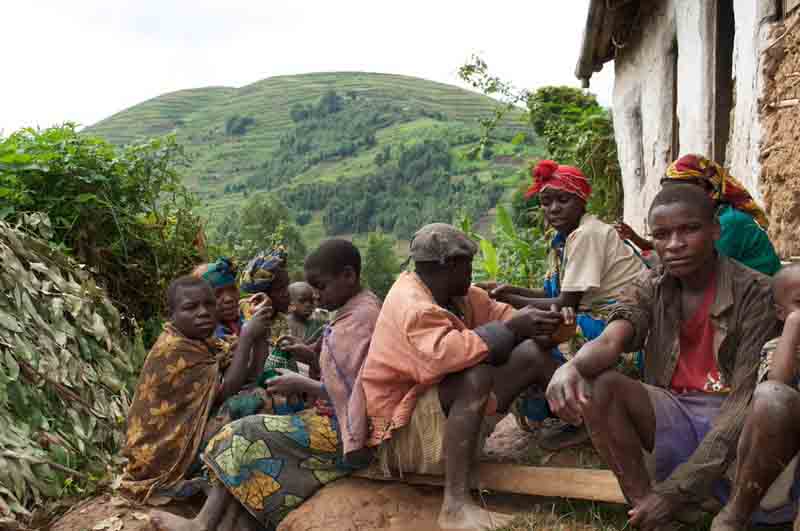
Long before Mgahinga was gazetted as a national park in 1991, the dense montane forests were the ancestral home of the Batwa pygmies. As hunter-gatherers, the Batwa lived in complete harmony with the forest, relying on it for shelter, food, herbal medicine, and spiritual identity.
When the park was created to protect endangered gorillas, the Batwa were evicted from the forest interior. Today, the Batwa Cultural Trail inside Mgahinga is a unique cultural preservation initiative run by the Batwa community in partnership with the Uganda Wildlife Authority.
Key Experience: Unlike typical cultural performances on the park periphery, the Batwa Cultural Trail takes place inside the forest itself. Guided by Batwa elders, visitors learn about traditional bow-and-arrow hunting techniques, medicinal plant harvesting, fire-making using friction sticks, and forest survival skills. The trail concludes inside the cavernous Garama Cave, a 342-meter subterranean lava tube that once served as the royal residence and council chamber for the Batwa king, where elders perform traditional songs in total darkness.
5. Rich Biodiversity in an Alpine Haven
Mgahinga’s dramatic altitude range—stretching from 2,227 meters up to 4,127 meters above sea level—creates distinct vegetation zones that host specialized flora and fauna found nowhere else in tropical Africa.
Vegetation Zones
As you climb higher, the landscape transitions through four distinct ecological belts:
- Farming Buffer Zone & Woodlands (Lower elevations)
- Dense Bamboo Forest (Primary feeding zone for Golden Monkeys)
- Hagenia-Hypericum Woodland (Favorite zone for Mountain Gorillas)
- Afro-Alpine Zone (High-altitude moorland featuring giant senecios and giant lobelias)
Wildlife Beyond Primates
While gorillas and golden monkeys command center stage, Mgahinga is home to over 76 species of mammals, including forest elephants, giant forest hogs, bushbucks, side-striped jackals, black-and-white colobus monkeys, and elusive leopards.
For bird enthusiasts, Mgahinga is a recognized Important Bird Area (IBA) sheltering over 180 bird species, including rare Albertine Rift endemics like the Rwenzori Turaco, Handsome Francolin, Stripe-breasted Tit, and Kivu Ground-Thrush.
Practical Information for Visiting Mgahinga
| Detail | Specification |
| Location | Kisoro District, Southwestern Uganda (Bordering Rwanda & DRC) |
| Main Gate / Hub | Ntebeko Visitor Centre |
| Working Hours | Open daily from 07:00 AM to 05:00 PM (EAT) |
| Mandatory Briefing Time | 07:30 AM daily for all morning treks and hikes |
| Access by Road (Kampala/Entebbe) | ~510 km (9–10 hours) via Masaka–Mbarara–Kabale–Kisoro |
| Access by Road (Kigali, Rwanda) | ~130 km (4–5 hours) via Cyanika border crossing |
| Access by Air | 1-hour flight from Entebbe to Kisoro Airstrip + 45-min drive |
| Vehicle Requirement | 4WD vehicle required for the 14 km dirt road from Kisoro to Ntebeko |