
Mount Sabinyo: Conquer the Legendary 3-Country Volcano in Mgahinga
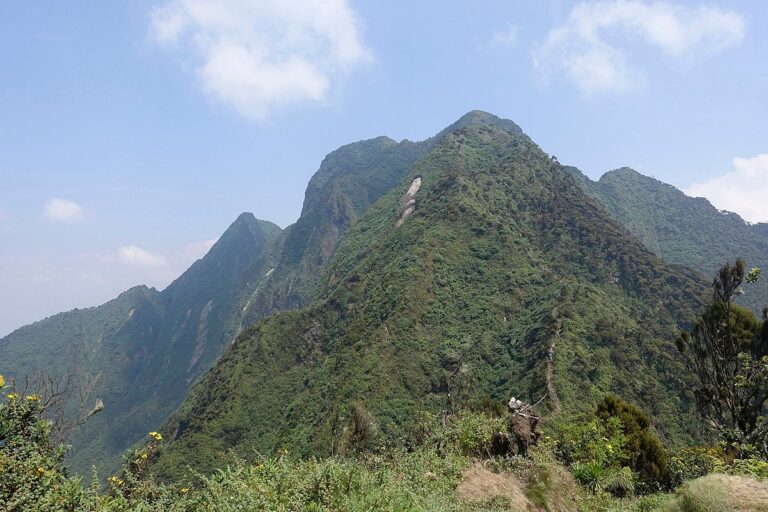
Rising majestically to an altitude of 3,669 meters within the Virunga Massif, Mount Sabinyo stands as one of the most striking and geographically unique volcanic peaks in East Africa. Shared by Uganda, Rwanda, and the Democratic Republic of Congo, its rugged, deeply eroded summit earned it the local nickname “Old Man’s Teeth”—resembling a jagged row of worn teeth standing against the skyline.
For travelers exploring Mgahinga Gorilla National Park, a trek up Mount Sabinyo offers an exhilarating alternative or complement to mountain gorilla trekking. It delivers a physically rewarding challenge, panoramic vistas across three nations, and an unforgettable journey through distinct alpine vegetation zones.
Why Trek Mount Sabinyo?
Mount Sabinyo provides a trekking experience unlike any other volcano in the Virunga chain. Here is what makes climbing this iconic peak a must-do adventure:
- Stand in Three Countries at Once: The absolute highlight of the Sabinyo hike is reaching Peak 3. At this precise summit point, you can stand with one foot in Uganda, one in Rwanda, and one in the Democratic Republic of Congo simultaneously.
- Breathtaking 360-Degree Views: From the various peaks, climbers are rewarded with sweeping views of the entire Virunga chain, the rolling hills of Rwanda, the distant peaks of the Rwenzori Mountains (on clear days), and the lush agricultural patchwork of the Kisoro valleys below.
- Diverse Ecological Zones: As you ascend from the park headquarters, the trail transitions through thick bamboo forests, dense montane sub-alpine zones, and dramatic giant heather forests draped in hanging moss.
- Albertine Rift Endemics: The mountain slopes are a haven for wildlife and birdwatchers. Keep an eye out for the endangered Golden Monkey, forest elephants, and endemic bird species such as the Ruwenzori Turaco and Archer’s Ground Robin.
Understanding the Trail: The Three Peaks
The climb up Mount Sabinyo is famous for its steep, rugged terrain and the literal use of wooden ladders to navigate steep volcanic rock rifts near the summit. The trek is divided into three distinct peaks along a single ridge:
- Peak 1: The first stage of the climb. It offers an excellent vantage point and a moderate workout through the lower forest canopy and bamboo zones.
- Peak 2: Continues along a sharp, knife-edge ridge with steep drops on either side, leading to stunning views into Rwanda and the DRC.
- Peak 3 (The Summit): The final leg requires scaling several wooden ladders bolted into the rock face. Standing at 3,669 meters, Peak 3 is where the borders of Uganda, Rwanda, and the DRC converge.
Note: While you do not need technical mountaineering gear, a strong level of physical fitness, good balance, and a head for heights are essential for navigating the steep ridge and ladders.
Essential Information for Your Mount Sabinyo Hike
1. Best Time to Visit
The dry seasons—June to August and December to February—offer the most favorable trail conditions with minimal rainfall. However, Mgahinga Gorilla National Park is open year-round, and the wet seasons (March to May, September to November) offer lush scenery and fewer crowds, though trails can be slippery and challenging.
2. Permits and Booking
- Park Permits: Hiking permits for Mount Sabinyo must be booked through the Uganda Wildlife Authority (UWA) or via a trusted local tour operator.
- Guides and Rangers: Armed park rangers and experienced guides are mandatory for all hikes to ensure safety and share insights into the local flora, fauna, and volcanic history.
3. What to Pack
- Sturdy Hiking Boots: Waterproof boots with deep ankle support and strong traction for volcanic mud and rocks.
- Rain Gear: A reliable waterproof jacket and trousers, as mountain weather can change rapidly.
- Warm Layers: Fleece or thermal layers for the chilly summit temperatures.
- Gloves: Gardening or grip gloves are highly recommended for holding onto the wooden ladders and rocky outcrops.
- Hydration and Snacks: Pack at least 2 to 3 liters of water and high-energy snacks for the 5-to-8-hour round trip.
- Walking Poles: Very helpful for stability on steep descents.