
Black & White Colobus Monkeys in Mgahinga Gorilla National Park
Nestled in the dramatic, mist-shrouded volcanic highlands of southwestern Uganda, Mgahinga Gorilla National Park is globally celebrated as the place “Where Gold Meets Silver”—referring to its endangered mountain gorillas and rare golden monkeys. However, Uganda’s smallest national park (covering just 33.7 square kilometers) harbors a rich tapestry of biodiversity beyond its headline primates. Among its most striking and graceful residents is the Angola Black & White Colobus Monkey (Colobus angolensis).
Cruising through the ancient montane forests and bamboo canopies, these charismatic arboreal primates offer an incredible, visually stunning wildlife-viewing experience for travelers exploring the Virunga region.
About the Black & White Colobus Monkeys
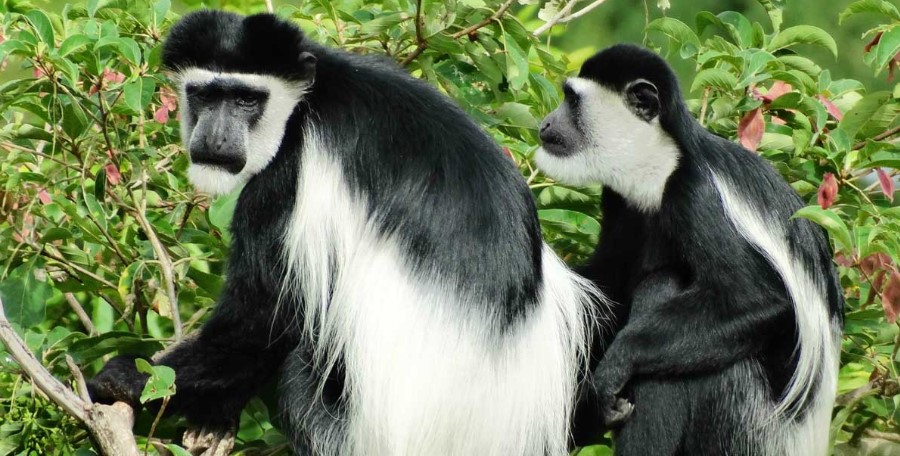
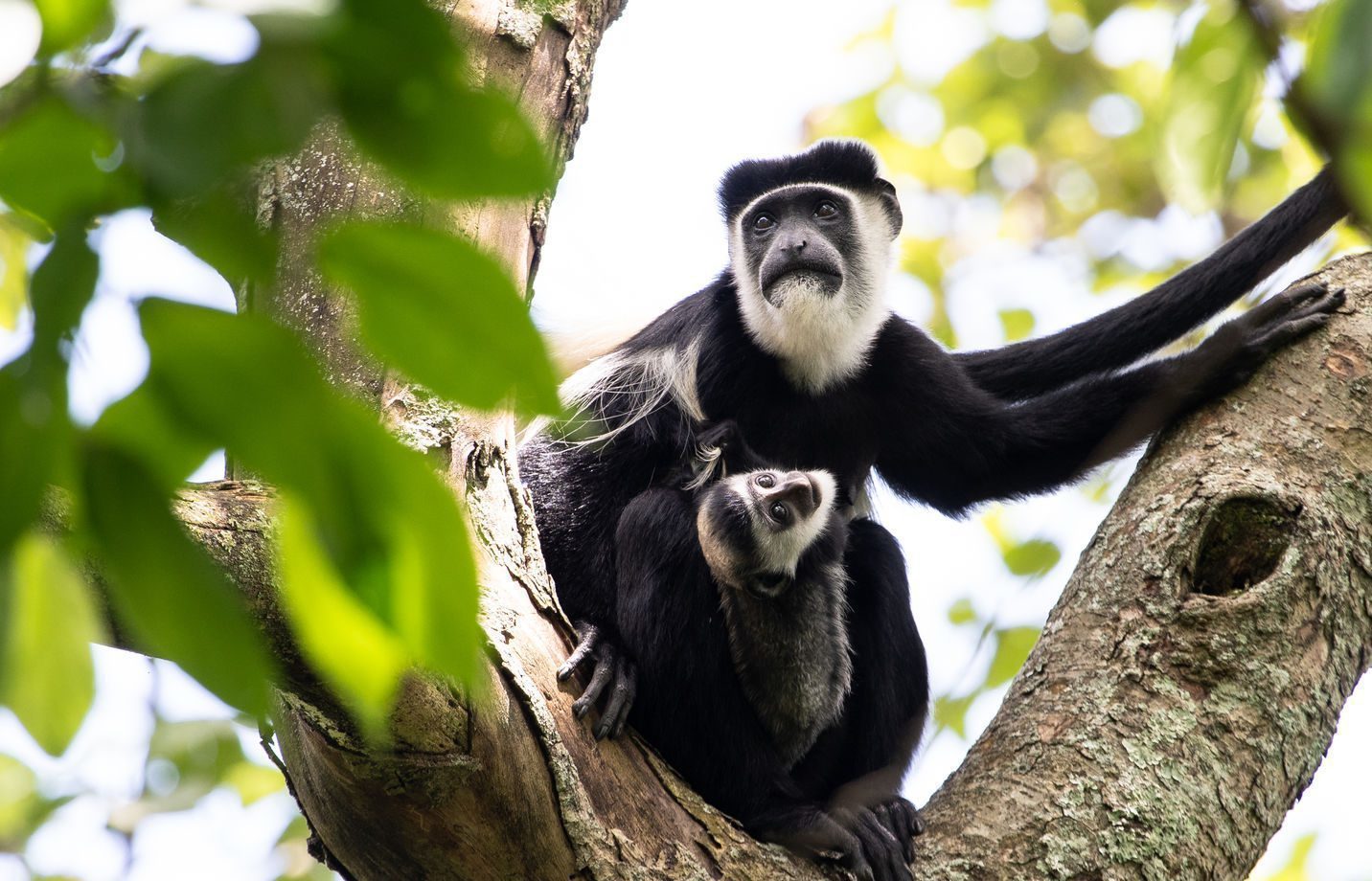
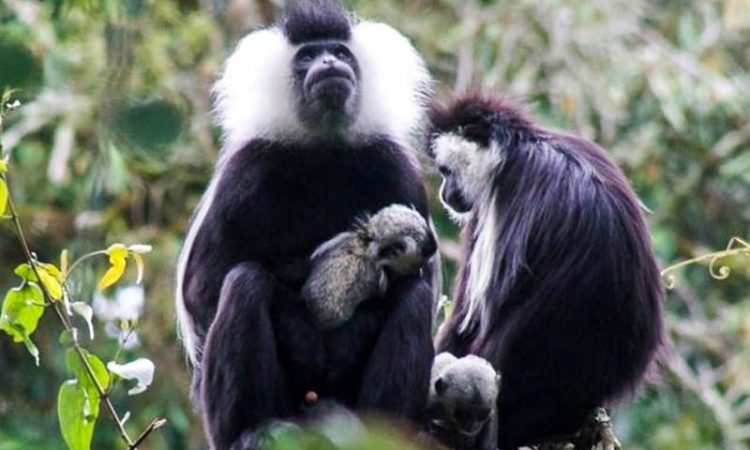
The Black & White Colobus is easily recognized by its dramatic, high-contrast coat. Featuring sleek jet-black fur contrasted sharply by a long, sweeping mantle of pristine white hair draped across their shoulders and back, along with a fluffy white tail, they resemble Victorian-era nobility swinging through the trees.
Unlike terrestrial monkeys, colobus monkeys are strictly arboreal, meaning they spend almost their entire lives high up in the forest canopy. They rarely descend to the ground, relying instead on their remarkable agility to leap vast distances between swaying branches.
Key Physical & Behavioral Traits:
- Specialized Diet: Colobus monkeys are folivores, meaning their primary diet consists of young leaves, shoots, flowers, and fruits. To digest this fibrous vegetation, they possess specialized, multi-chambered stomachs functioning similarly to ruminants (like cows).
- The Missing Thumb: The name Colobus comes from a Greek word meaning “mutilated” or “docked,” referring to the fact that these monkeys have severely reduced or absent thumbs—an evolutionary adaptation that makes them exceptionally fast and efficient hook-like swingers when navigating narrow branches.
- Social Structure: They live in cohesive, multi-female social groups led by one or more dominant males. Troops typically communicate through a series of dramatic, roaring calls early in the morning, which can echo across the mountain valleys of Mgahinga.
Where to Find Colobus Monkeys in Mgahinga
While Mgahinga is heavily visited for mountain gorilla trekking and golden monkey tracking, the park’s diverse ecosystems—ranging from dense lower montane forests to sub-alpine zones along the slopes of Mount Muhavura, Mount Gahinga, and Mount Sabinyo—provide an ideal sanctuary for Black & White Colobus monkeys.
They are frequently spotted by hikers, birdwatchers, and nature walkers along the lower forest trails radiating from the Ntebeko Visitor Centre, as well as along the fringes of the park where the forest meets local farmlands.
Why Add Colobus Monkey Viewing to Your Mgahinga Safari?
- Stunning Photography: The striking contrast of their black-and-white pelage against the emerald-green backdrop of the Virunga volcanoes makes for exceptional wildlife photography.
- Complementary Wildlife Experience: While gorilla permits are strictly limited and require advance booking, encountering troops of Colobus monkeys can often be enjoyed spontaneously during guided nature walks, birdwatching excursions, or volcano hikes.
- Immersive Forest Biodiversity: Observing these high-altitude leapers highlights the rich, interconnected ecosystem of the Virunga Conservation Area, home to over 79 mammal species and nearly 180 bird species.
Plan Your Visit to Mgahinga Gorilla National Park
Are you ready to witness the diverse wildlife of Mgahinga firsthand? Whether you want to track the resident Nyakagezi gorilla family, spot rare golden monkeys, or marvel at the elegant Black & White Colobus Monkeys swinging through the canopy, planning your journey is simple:
- Best Time to Visit: The dry seasons (June to October and December to March) offer the most comfortable trail conditions for hiking and wildlife viewing.
- Getting There: Mgahinga can be reached via a scenic 9–10 hour drive from Kampala/Entebbe, a 4–5 hour drive across the border from Kigali (Rwanda) via the Cyanika border, or via a scheduled domestic flight to Kisoro Airstrip.
- Where to Start: All park activities officially begin at the Ntebeko Visitor Centre, open daily from 07:00 AM to 05:00 PM.